

What happens when you reach a prescriber at the right moment?
A look at results across a sample of therapeutic areas — and what actually drives them.
Reaching prescribers gets harder every year. More competing messages, less time in the consult, and growing scepticism about promotional content mean that traditional pharmaceutical marketing is increasingly easy to tune out.
But there’s a different approach, one that doesn’t interrupt prescribers, it meets them where they already are.
MediActivate uses e-prescribing technology to deliver digitally triggered, clinical guideline-based messaging inside the prescriber workflow. Not advertising. Not awareness. A relevant clinical suggestion, triggered at the moment a prescribing decision is being made.
The difference in how that lands and what it drives is significant.
“Impressions measure visibility. Scripts measure decisions.”
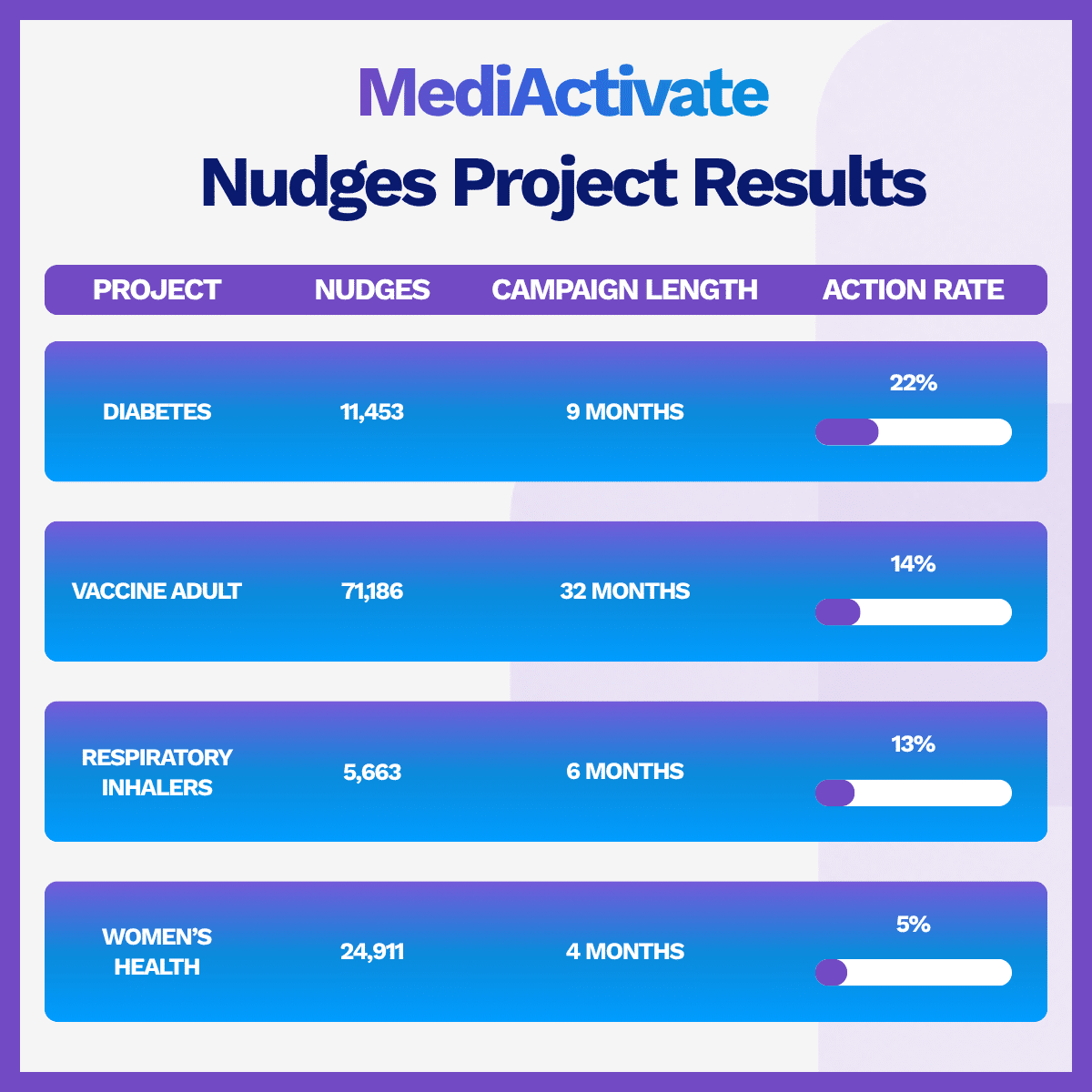
The case studies below are drawn from 2025/2026 projects across a deliberately diverse range of therapeutic areas. They’re here to show how this approach performs in practice, not in theory.
What these projects have in common
Each result below came from a nudge: a clinical review suggestion delivered inside the practice management system at the time of prescribing, against a matched patient record.
Prescribing behaviour doesn’t shift because of awareness alone. It shifts when the right information reaches a clinician at the moment it’s relevant — inside the consult, against the right patient record, while the decision is still being made.
The projects span prescription products and vaccines, and a range of campaign lengths, to show how nudging performs across very different clinical contexts.
Three things that consistently move the needle
Before reading any individual result, it’s worth understanding the variables that shape them.
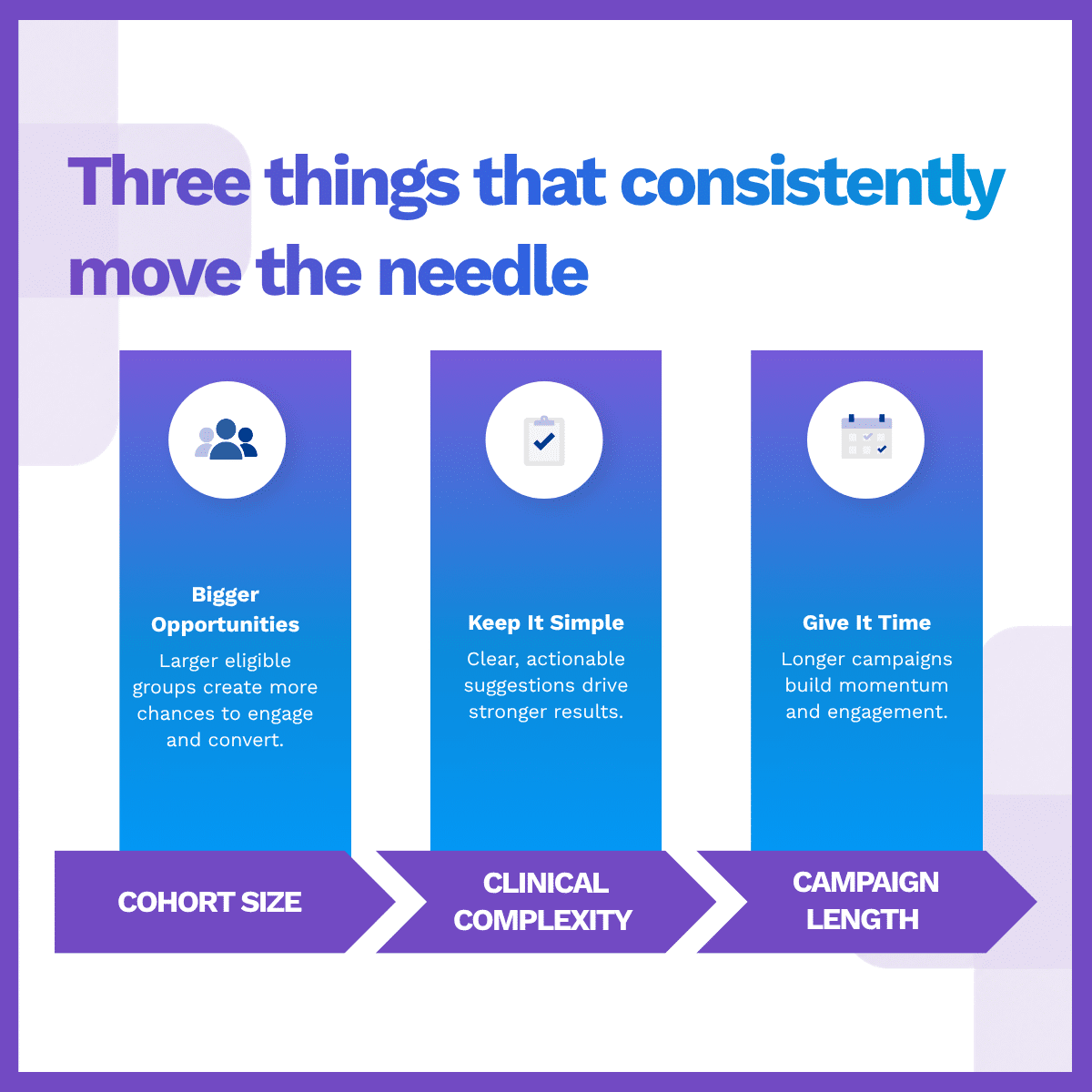
Cohort size — larger eligible cohorts give more opportunities to nudge and convert, but bigger isn’t always better. Very large cohorts risk overexposure, so targeting by clinical risk and safety matters. The sweet spot sits around 40,000 to 60,000 records.
Clinical complexity — simple, clear suggestions (a switch, an add-in, an opportunistic vaccination) outperform suggestions that require a clinician to work through a full clinical pathway.
Campaign length — longer programmes allow the message to be reinforced, and the engagement action compounds over time. The lowest results in this sample came from comparatively short campaigns.
A 5% action rate on a complex chronic disease review and a 22% rate on a simple add-in aren’t really comparable numbers — they’re answers to very different questions. Read each result against the clinical intent behind it.
Timing is everything
The clearest lesson from the past few years: the timing of a nudge should match the clinical suggestion.
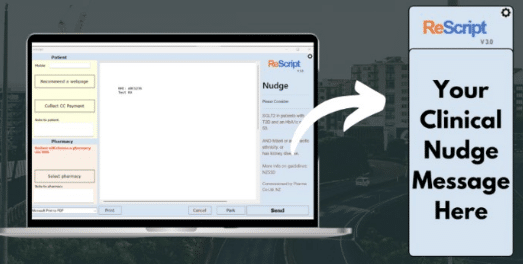
For simple suggestions — an add-in, a switch, an opportunistic vaccination — a prompt at the end of the consult is proven and effective. The decision is quick, and the prompt lands while the clinician is wrapping up.
For more involved suggestions — reviewing a chronic disease state, walking a patient through a clinical pathway — timing the nudge to appear early in the consult works far better. The clinician needs that information while there’s still room in the consult to act on it.
This is why MediActivate’s Clinical Pop-Up is built to trigger in the first 30 to 60 seconds after a patient record is opened — and why it’s designed not to annoy prescribers, with preference settings that keep clinicians in control.
Want to see what this could look like for your brand?
If you manage a pharmaceutical brand in New Zealand or Australia and want to understand whether a nudge programme is right for your therapeutic area, get in touch.